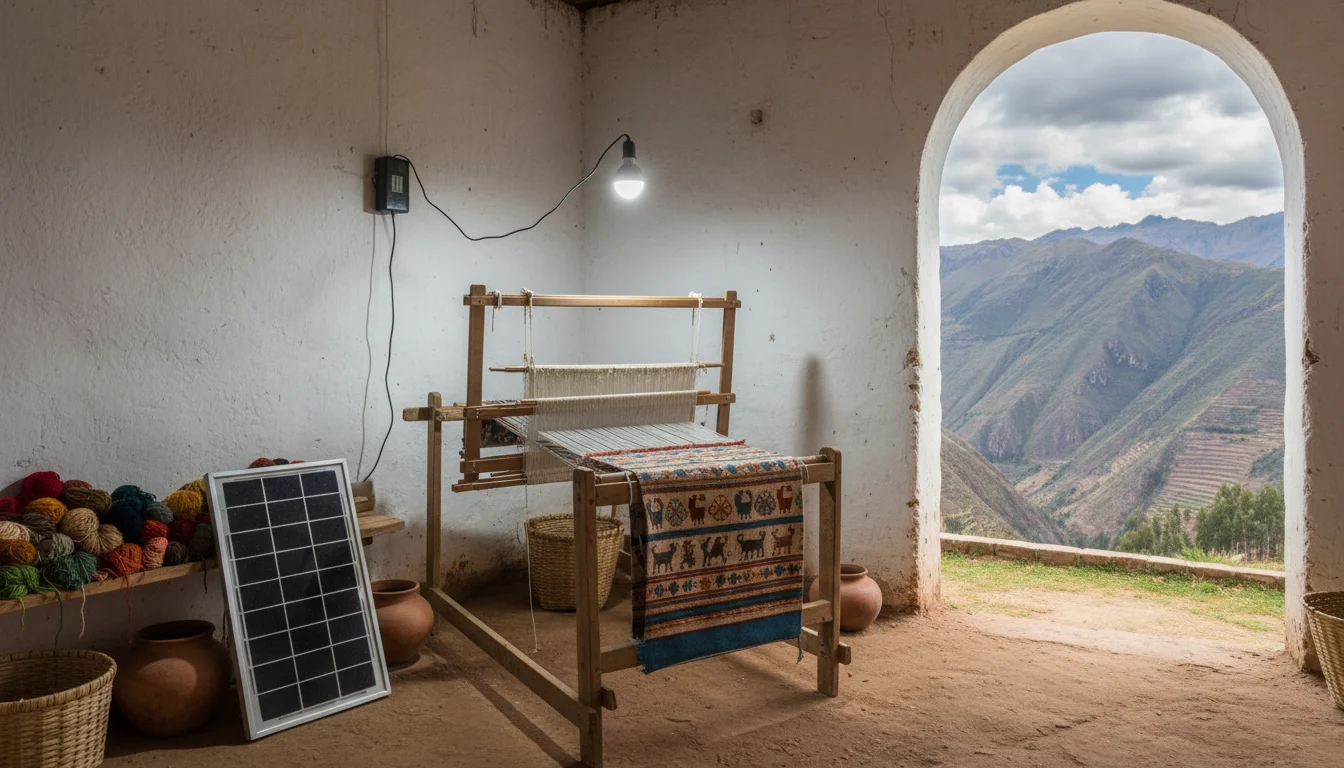
The year is 2026, and the struggle for indigenous rights and cultural preservation in Latin America continues, often overshadowed by mainstream narratives. Consider the story of Elena Quispe, a Quechua weaver from the Andean highlands of Peru, whose ancestral lands and traditional textile practices face relentless pressure from external forces. Elena’s community in the remote district of Chinchero, near Cusco, has for generations maintained a lively weaving tradition, each intricate pattern a living history, a direct link to her ancestors. But the world outside her village often sees only a tourist attraction, not a sovereign culture. Can these unheard narratives finally find their voice?
Key Takeaways
- Indigenous communities across Latin America are actively employing digital platforms and direct-to-consumer models to secure economic autonomy and bypass exploitative intermediaries.
- Legal frameworks in several Latin American nations, including Peru and Ecuador, increasingly recognize collective intellectual property rights, offering new avenues for protecting indigenous cultural heritage.
- The average age of indigenous language speakers is rising in many regions, necessitating urgent, targeted language revitalization programs incorporating digital tools and intergenerational teaching.
- Direct engagement with indigenous-led organizations and purchasing directly from indigenous artisans provides tangible support for self-determination and cultural continuity.
- Satellite monitoring and community-led surveillance initiatives are proving effective in documenting and combating illegal resource extraction on indigenous territories, particularly in the Amazon basin.
Elena’s daily life is proof of resilience. From dawn, the rhythmic clack of her loom fills her small home, a sound echoing through centuries. She uses natural dyes, painstakingly extracted from cochineal insects, plants like the Q’olle, and local minerals, a process passed down from her grandmother. Each thread, each color, holds meaning. “These designs tell our story,” Elena explained during a recent interview conducted through a local interpreter. “They are not just pretty blankets. They are our identity, our connection to Pachamama (Mother Earth).” Her community, like many indigenous groups across Latin America, faces a multifaceted threat: economic marginalization, the erosion of traditional knowledge, and the relentless encroachment on their ancestral territories. The narrative of progress often overlooks the deep losses experienced by these communities.
The economic struggle for Elena’s community is particularly acute. For years, intermediaries have bought their exquisite textiles at meager prices, reselling them in tourist markets for significant profit, leaving the weavers with barely enough to sustain their families. This exploitative chain has long plagued indigenous artisans. “They tell us our work is beautiful, but they pay us so little,” Elena recounted, her voice tinged with frustration. “It’s hard to keep our traditions alive when we cannot feed our children.” This practice highlights a systemic issue where indigenous labor and cultural products are devalued, a problem that extends far beyond Peruvian textiles. According to a 2024 report by the United Nations Permanent Forum on Indigenous Issues (UNPFII), indigenous peoples in Latin America, despite being custodians of 80% of the world’s biodiversity, disproportionately experience poverty and lack access to basic services. The report details how a significant portion of their traditional crafts are marketed through channels that offer minimal returns to the creators, citing examples from Guatemala’s weaving cooperatives to Ecuador’s Otavalo market.
However, a shift is underway, driven by indigenous communities themselves. Elena’s granddaughter, Sofia, a bright 20-year-old, represents this new wave. Sofia, who attended a local technical school, understands the power of technology. She began by taking photos of her grandmother’s weavings with her smartphone, creating a basic online catalog. “We have to show the world directly,” Sofia asserted, her eyes alight with determination. “Why should someone else profit from our art?” This initiative, though small, began to connect them with ethical buyers globally, cutting out some of the exploitative middlemen. This direct-to-consumer model is gaining traction among various indigenous groups. For example, the Wixárika (Huichol) artisans in Mexico have successfully launched online storefronts to sell their intricate beadwork and yarn paintings, demonstrating the potential for digital platforms to help communities and ensure fairer compensation. A recent article in Reuters in September 2025 highlighted several such digital initiatives, noting a 35% increase in direct online sales for indigenous craft collectives across Mexico, Peru, and Bolivia over the past two years.
Beyond economic exploitation, the threat to cultural preservation is equally pressing. The Quechua language, a lively tongue spoken by millions, faces pressure from Spanish dominance and the lure of urban migration. Young people, like Sofia, are often caught between two worlds. While Sofia embraces technology, she also actively participates in language preservation efforts within her community, teaching younger children traditional songs and stories in Quechua. This intergenerational transfer of knowledge is vital. The Inter-American Commission on Human Rights (IACHR) published a complete report in late 2025 on the state of indigenous languages in the Americas, observing that over 50% of indigenous languages are considered endangered or critically endangered, with a loss rate of approximately one language every two weeks globally. The report particularly emphasized the lack of strong educational policies supporting bilingual or multilingual education in indigenous languages, despite constitutional recognitions in many countries. This is a critical oversight. Without language, much of the cultural fabric unravels.
Legal battles also form a significant part of the indigenous narrative. In Peru, the fight for land rights and protection against illegal mining and logging operations is ongoing. Elena’s community, situated in a region rich in natural resources, has witnessed firsthand the environmental degradation caused by unchecked extractive industries. These activities not only destroy sacred lands but also disrupt traditional ways of life and poison water sources. The Peruvian National Institute for the Defense of Competition and Intellectual Property Protection (INDECOPI) has recently begun to acknowledge the collective intellectual property rights of indigenous communities over their traditional designs and knowledge. This legal recognition, while still nascent, offers a glimmer of hope. In 2024, a landmark case in the Peruvian Amazon saw the Wampis Nation successfully secure an injunction against illegal gold miners operating within their titled territory, a victory widely reported by AP News, setting a precedent for other communities. This demonstrates the power of organized legal action when combined with international advocacy.
The role of technology in monitoring and advocacy cannot be overstated. Indigenous communities are increasingly using satellite imagery and drone technology to document illegal logging and mining activities on their lands, providing irrefutable evidence to authorities and international bodies. Organizations like Amazon Conservation Team (ACT) partner with indigenous groups to train them in geospatial mapping and monitoring techniques, helping them to become guardians of their own territories. This shift from being passive victims to active monitors is powerful. It allows them to collect specific data points, such as coordinates of illegal deforestation or the dates of specific incursions, which strengthens their legal claims and appeals to international human rights organizations. It also provides a level of transparency that was previously impossible. This is not about abstract concepts. It’s about specific, verifiable evidence that can hold corporations and governments accountable.
The international community’s engagement, while sometimes slow, is also evolving. The United Nations Declaration on the Rights of Indigenous Peoples (UNDRIP), adopted in 2007, provides a framework for addressing indigenous issues, though its implementation remains a challenge in many nations. Advocacy groups like Cultural Survival and Survival International actively work to amplify indigenous voices on the global stage, pressuring governments and corporations to respect indigenous rights. Their reports frequently detail specific instances of human rights abuses and environmental destruction, often providing the only complete documentation available from the ground. This global pressure can, and does, lead to tangible changes, as seen in the increasing number of multinational corporations adopting stricter ethical sourcing policies for products originating from indigenous territories.
Elena and Sofia’s journey in Chinchero is a microcosm of a much larger movement. Through Sofia’s digital outreach, their textiles now reach customers in Europe and North America who value ethical production and cultural authenticity. They are even exploring setting up a small community workshop to teach younger generations not only the weaving techniques but also the business side of direct sales, ensuring that knowledge of both craft and commerce is passed down. This integration of tradition with modern business practices is, in my opinion, the most effective path forward for many indigenous communities. It allows them to retain their cultural identity while achieving economic self-sufficiency, rather than being forced to choose between the two. The challenges remain immense, but the determination of individuals like Elena and Sofia, coupled with growing awareness and support, offers a compelling vision for the future of indigenous rights and cultural preservation.
The narratives of Latin America’s indigenous peoples are not relics of the past. They are lively, evolving stories of survival, resistance, and innovation. Supporting indigenous-led initiatives, understanding their struggles, and demanding accountability from governments and corporations are concrete steps everyone can take to ensure these essential voices are not only heard but truly empowered.
What are the primary threats to indigenous cultural preservation in Latin America?
The primary threats include economic marginalization, the erosion of traditional knowledge due to external pressures, language loss, and the ongoing encroachment on ancestral territories by extractive industries and agricultural expansion.
How are indigenous communities using technology to advance their rights?
Indigenous communities are using digital platforms for direct-to-consumer sales of traditional crafts, using social media for advocacy, employing satellite imagery and drones for environmental monitoring, and using digital tools for language revitalization and educational programs.
What role do legal frameworks play in protecting indigenous rights?
Legal frameworks, both national and international (like UNDRIP), provide a basis for recognizing land rights, collective intellectual property, and cultural protections. However, effective implementation and enforcement remain significant challenges in many regions, often requiring sustained advocacy and legal action from communities.
Why is language preservation so important for indigenous cultural survival?
Language is a fundamental carrier of culture, encapsulating traditional knowledge, spiritual beliefs, oral histories, and unique worldviews. Its loss often leads to the erosion of other cultural practices and identity, making language revitalization a core component of cultural preservation efforts.
How can individuals support indigenous rights and cultural preservation?
Individuals can support by purchasing directly from indigenous artisans and ethical businesses, advocating for policies that protect indigenous land and cultural rights, supporting indigenous-led organizations, and educating themselves on indigenous histories and contemporary issues.