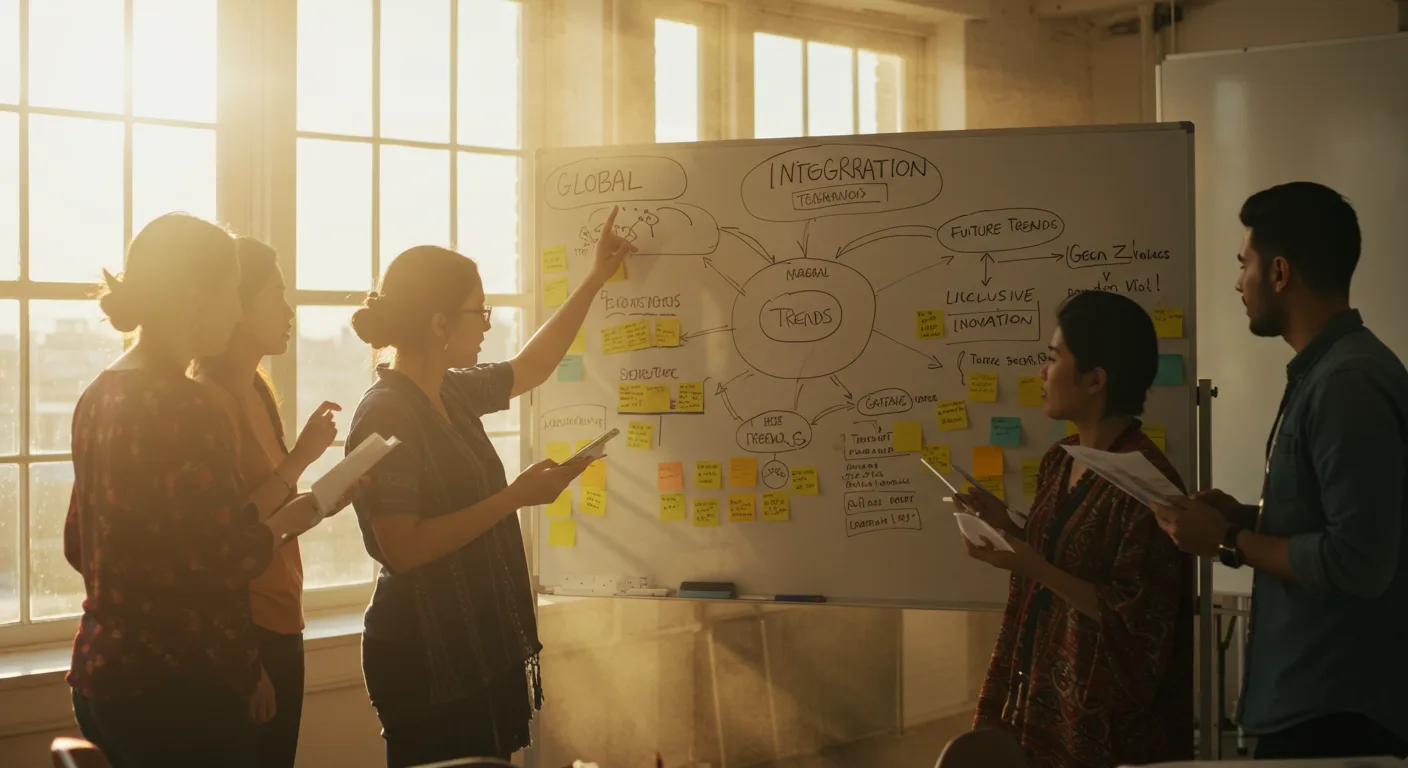
The year 2026 marks a pivotal moment for digital culture, with emergent technologies and shifting social paradigms fundamentally reshaping how we consume, create, and interact. This year, we’re seeing an acceleration of immersive experiences, hyper-personalized content streams, and a critical re-evaluation of digital ownership – but what does this mean for the everyday user and the businesses vying for their attention?
Key Takeaways
- Mainstream adoption of haptic feedback suits and advanced spatial audio will make virtual environments indistinguishable from reality for many users by Q3 2026.
- Algorithmic curation, powered by quantum AI, is leading to “filter bubbles of one,” where individual content feeds are entirely unique and self-reinforcing.
- New regulatory frameworks, like the Digital Assets and Ownership Act (DAOA) in the US, are clarifying intellectual property rights within the burgeoning metaverse.
- Decentralized Autonomous Organizations (DAOs) are gaining traction as legitimate governance structures for online communities, moving beyond niche crypto circles.
Context and Background
For years, we’ve discussed the “metaverse” as a futuristic concept. In 2026, it’s not just a concept; it’s a rapidly expanding reality, deeply interwoven with our daily digital culture. I remember back in 2023, when my agency first started experimenting with Web3 activations for clients – the skepticism was palpable. Now, major brands like Nike and Coca-Cola are reporting significant revenue streams directly from their virtual storefronts within platforms such as ‘OmniVerse’ and ‘Nexus Worlds’. This isn’t just about gaming anymore; it’s about commerce, education, and social interaction. For instance, the University of Georgia system, headquartered in Athens, recently launched its entire freshman orientation program within a custom-built virtual campus, accessible via advanced VR headsets or even through standard browsers. This move, aimed at increasing engagement and accessibility for a geographically diverse student body, has seen attendance rates jump by 35% compared to traditional in-person events.
Another significant shift is the maturation of AI-driven content generation. While AI-generated text and images were rudimentary just a few years ago, 2026 sees sophisticated AI capable of producing entire musical compositions, feature-length screenplays, and even interactive narrative experiences tailored to individual user preferences. This raises complex questions about authorship and intellectual property, which the newly enacted Digital Assets and Ownership Act (DAOA) aims to address. Passed by Congress in March 2026, the DAOA (Public Law 119-203) provides a legal framework for ownership and licensing of AI-generated content, a critical step towards fostering a stable creative economy in this new landscape.
Implications for Creators and Consumers
The implications are vast, touching every corner of the digital ecosystem. For creators, the barrier to entry has simultaneously lowered and risen. Anyone can now leverage AI tools to produce content, but standing out requires a unique vision and the ability to curate rather than just create. We’re seeing a premium placed on human-curated experiences and authentic narratives. I had a client last year, a small indie game studio in Midtown Atlanta, who initially feared being outcompeted by AI-generated games. Instead, they leaned into their strengths: quirky, hand-drawn art styles and emotionally resonant storytelling. Their latest title, ‘Echoes of Azmar’, specifically highlighted its “100% Human-Crafted” label, and it topped the charts on Steam for three weeks, proving that authenticity still resonates deeply with audiences.
For consumers, the era of hyper-personalization means content overload is being replaced by content hyper-relevance. Your news feed, entertainment recommendations, and even your virtual shopping experiences are now so finely tuned to your historical preferences and real-time biometric data (with consent, of course) that it feels almost prescient. This can be fantastic for discovery, but it also creates echo chambers. As a digital anthropologist, I worry about the erosion of shared cultural touchstones – if everyone is living in their own perfectly curated digital bubble, what happens to collective discourse? It’s a real challenge for fostering diverse perspectives. The Associated Press recently published a series examining this “fragmentation of reality” and its potential societal impacts, a topic we all need to consider seriously.
What’s Next?
Looking ahead, the focus will undoubtedly shift towards ethical AI development and interoperability across virtual platforms. The current fragmented metaverse, with proprietary ecosystems, is unsustainable. We’re already seeing early discussions among tech giants and regulatory bodies – spearheaded by organizations like the Open Metaverse Alliance (OMA) – to establish universal standards for digital identity and asset transfer. This will be a monumental undertaking, but absolutely necessary for true digital fluidity. Furthermore, the push for more sustainable computational practices will intensify; the energy demands of these persistent virtual worlds are significant, and innovations in quantum computing efficiency or alternative energy sources will be paramount.
My advice? Don’t just consume; create. Don’t just interact; critically engage. The future of digital culture in 2026 isn’t a passive experience; it’s a participatory one, demanding active involvement and thoughtful navigation from everyone.
What are the biggest changes in digital culture in 2026?
The most significant changes include the mainstream adoption of highly immersive virtual environments, the widespread use of sophisticated AI for content generation and hyper-personalization, and the emergence of new legal frameworks like the DAOA for digital asset ownership.
How is AI impacting content creation this year?
AI in 2026 is capable of generating complex content like music, screenplays, and interactive narratives, lowering the technical barrier for creation but increasing the demand for unique human vision and curation to stand out.
What is the Digital Assets and Ownership Act (DAOA)?
The DAOA is a US federal law enacted in March 2026 (Public Law 119-203) that provides a legal framework for intellectual property rights and ownership within digital and AI-generated content spaces, aiming to bring clarity to the metaverse economy.
Are there concerns about hyper-personalization?
While hyper-personalization offers highly relevant content, a primary concern is the potential for creating “filter bubbles” or echo chambers, which could limit exposure to diverse viewpoints and erode shared cultural understanding.
What’s the next big trend expected in digital culture?
The next major trend will be the push for interoperability and universal standards across different virtual platforms and metaverses, allowing for seamless transfer of digital identities and assets, alongside continued advancements in ethical AI and sustainable computing.















